5-Axis CNC & Automation Buyer’s Guide
A Strategic Framework for Manufacturers in Michigan, Ohio, and Southwestern Ontario
Investing in 5-axis CNC machining or automation is not merely an equipment upgrade—it is a high-stakes decision that redefines your shop’s throughput, labor dependency, and long-term competitiveness. In a region defined by Tier 1 automotive and aerospace standards, the “old way” of multi-op 3-axis machining is increasingly a liability.
This guide is designed to help manufacturers evaluate when 5-axis machining and CNC automation make sense, which configurations fit their specific part mix, and how to approach the investment with financial and technical clarity.
What problem are you trying to Solve?
Before evaluating spindle speeds or robotic reaches, you must define the specific production bottleneck. 5-axis machining and automation are solutions to specific operational friction points, not starting points in themselves.
Ask your production team:
- The Setup Tax: Are parts sitting in queues because they require 4, 5, or 6 separate setups?
- The Precision Gap: Are you losing parts to “tolerance stacking” because they are being re-fixtured manually?
- The Labor Ceiling: Is your spindle uptime capped by the number of operators you can hire for a second or third shift?
- The Growth Barrier: Are cycle times preventing you from bidding on more complex, higher-margin work?
3-Axis vs. 5-Axis:
When Does the Shift Make Sense?
The “Setup Tax” in 3-Axis Machining
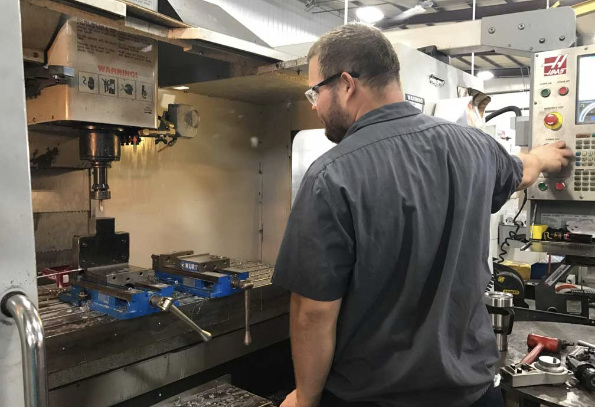
In a traditional 3-axis environment, complex parts are expensive because of “handling time.” Each additional setup requires custom fixturing, manual intervention, and a new “zero” point. This increases labor costs and introduces the “Human Variable”—the primary cause of scrapped parts and inconsistent GD&T.
The 5-Axis Paradigm Shift
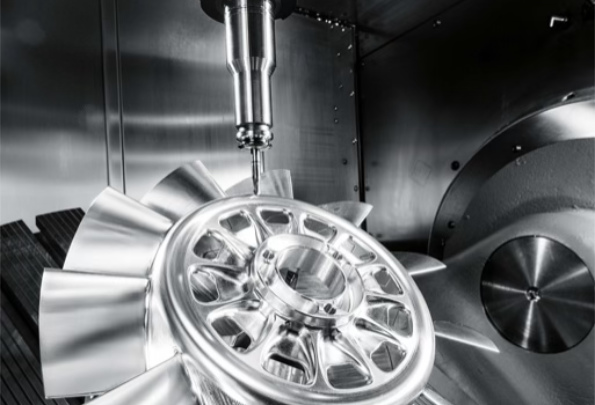
Unlike traditional milling, a 5-axis CNC machining center allows manufacturers to machine complex parts in a single setup by moving along five simultaneous axes. By articulating the tool or the part across the X, Y, and Z linear axes plus the A and B rotary axes, you gain total part access.
Choosing the Right Machine Configuration
The “Best” 5-axis machine is entirely dependent on your part envelope and weight.
Trunnion Table Machines
Best for: Small to medium high-precision components with complex undercuts.
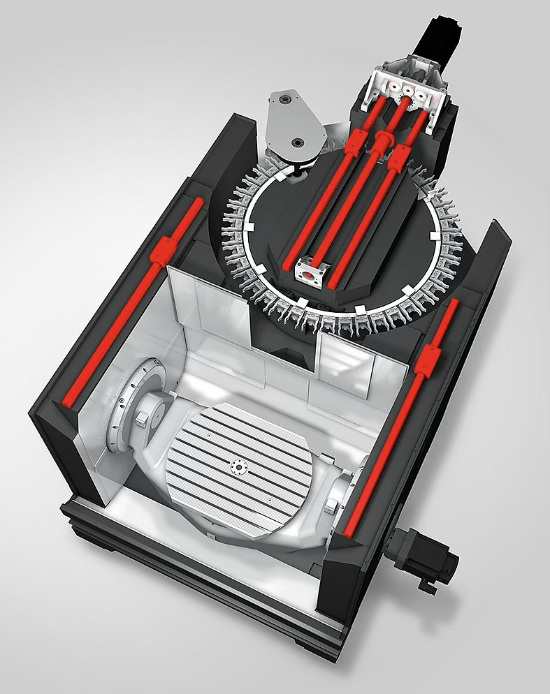
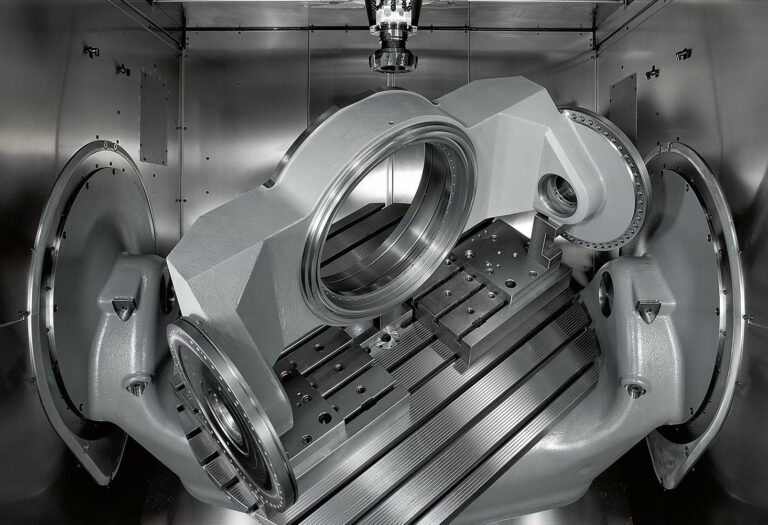
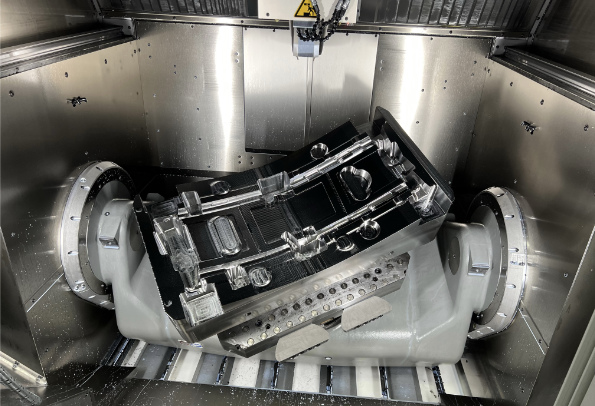
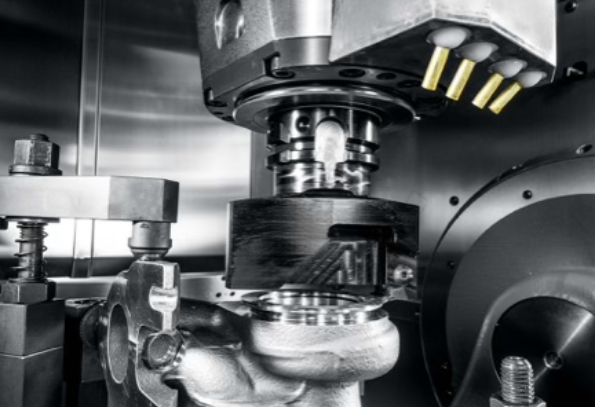
The Advantage: Trunnion systems (featured in Hermle and YCM NFX series) offer immense rigidity. Because the table tilts and rotates, you get incredible access to five sides of a part with high positional accuracy. This is the “workhorse” configuration for medical and small aerospace components.
Swivel Head / Gantry Systems
Best for: Oversized, heavy workpieces, and large mold bases.
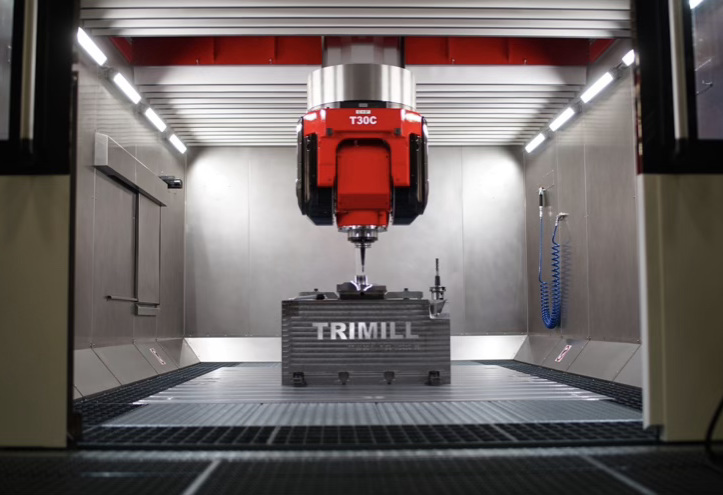
The Advantage: In a swivel-head system (like those from Trimill or YCM), the part remains stationary on the floor or a large fixed table. The spindle provides the multi-axis movement. This is ideal for heavy parts where tilting a massive table would compromise accuracy or safety.
Understanding CNC Automation Options
Automation should be a ladder, not a leap. We recommend a staged approach to ensure your team and workflow can keep up with the technology.
Stage 1:
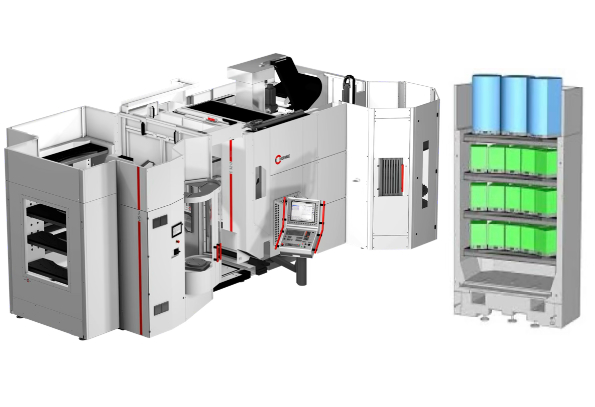
Pallet Systems
This is the entry point to “Lights-Out” manufacturing. By standardizing workholding, you can queue up multiple jobs. The machine finishes one part and automatically swaps in the next pallet. It’s about keeping the spindle turning while the operator is busy elsewhere or at home.
Stage 2:
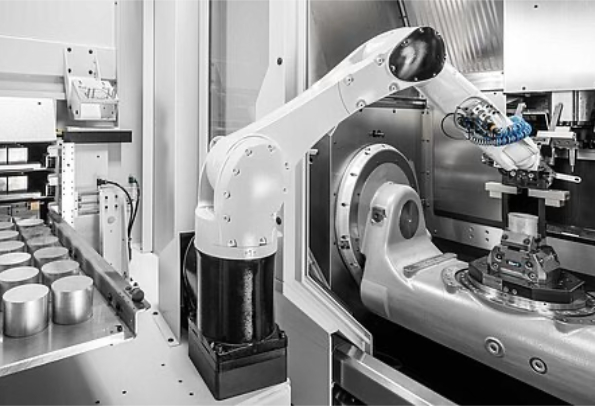
Robotic Machine Tending
When your volume justifies it, robotic arms can handle the loading and unloading of raw stock. This reduces operator dependency and allows for consistent, 24/7 production cycles regardless of labor availability.
Stage 3:
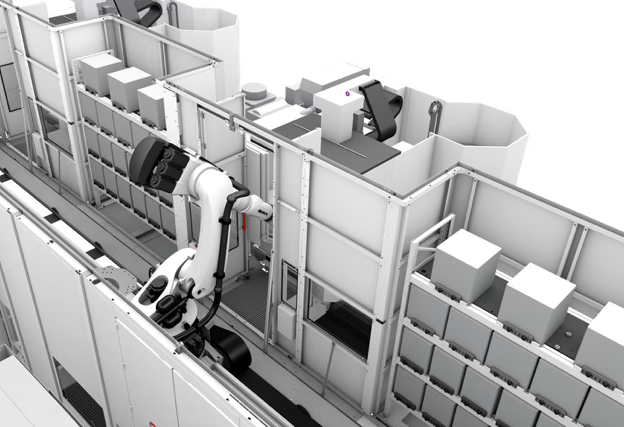
Integrated Automation Cells
The pinnacle of efficiency. This involves multiple 5-axis machines connected by a centralized robotic system or rail. These cells are designed for high-volume, high-complexity throughput where the “cost-per-part” is the primary driver of profitability.
How to Evaluate ROI:
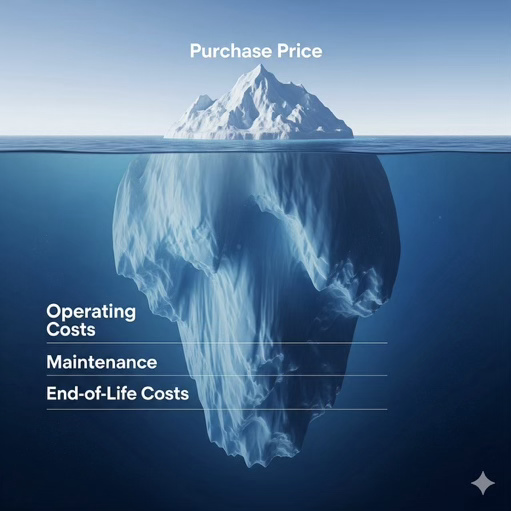
Beyond the Machine Price
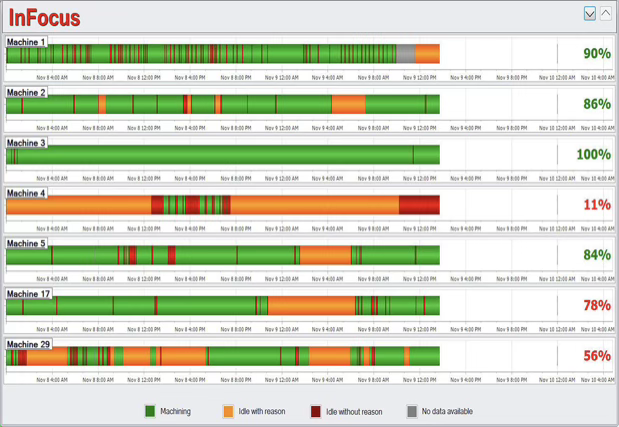
The key metric is Spindle Uptime, not the sticker price of the machine.
The Utilization Gap
A standard 3-axis machine in a manual shop typically runs 6–8 hours per day. An automated 5-axis system can easily run 16–22 hours per day.
- The Math: If your machine is running three times as much, your return on investment is achieved three times faster.
- The Labor Factor: High-end 5-axis systems allow you to increase output without doubling your headcount. You are paying for “capacity,” not just “capability.”
Industry-Specific Considerations
Focus on reducing setups to maintain strict GD&T. 5-axis is the only way to consistently produce flight-critical components with complex internal geometries.
Focus on surface finish. High-Precision 5-axis milling can eliminate hours of manual polishing on die/mold tooling.
Focus on “Lights-Out” reliability. In the Ontario and Michigan automotive corridors, the ability to run unattended through the weekend is the difference between winning and losing a contract.
Common Mistakes to Avoid
- Buying Spec instead of Process: Don't buy a machine because of its RPMs; buy it because of how it handles your most difficult part.
- Underestimating Fixturing: 5-axis requires high-end workholding. Don't put a $100 vise on a $500k machine.
- Ignoring Software: Simulation and collision avoidance software are non-negotiable for 5-axis success.
- Focus on the “Cost of Ownership” not the initial purchase price.
Ready to Evaluate Your Next Step?
The decision to move to 5-axis is complex, but the path to clarity is simple. 5Xi Intelligence works as a regional partner to manufacturers across Michigan, Ohio, and Southwestern Ontario to evaluate production goals before recommending hardware.
Our 15-minute strategy calls provide clarity on:
- Part-to-machine compatibility.
- Real-world automation ROI.
- Implementation timelines and training requirements.
Frequently Asked Questions about 5-Axis & Automation
How much does a 5-axis CNC machining center cost?
In the industrial market (MI, OH, ON), a high-performance 5-axis machining center typically ranges from $200,000 to over $1,000,000, depending on the brand, envelope size, and integrated options. While the initial capital expenditure is higher than 3-axis, the ROI is driven by the elimination of multiple setups and the reduction in total cycle time.
Can I automate my existing 5-axis machine?
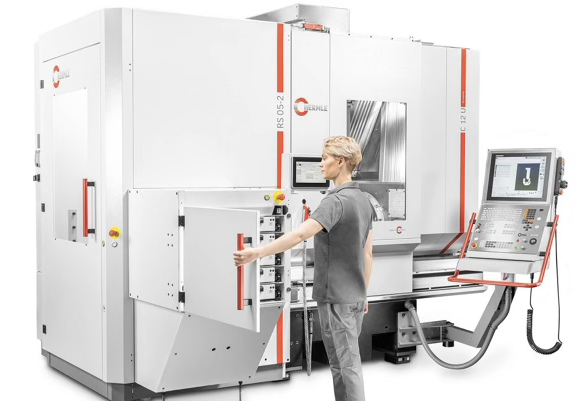
Most modern 5-axis platforms are “automation-ready.” We can often integrate robotic machine tending or pallet systems into existing setups, provided the machine has the necessary interface (automatic doors, pneumatic/hydraulic clamping, and CNC compatibility). 5Xi specializes in retrofitting strategy to maximize your current spindle uptime.
Is 5-axis machining difficult to program?
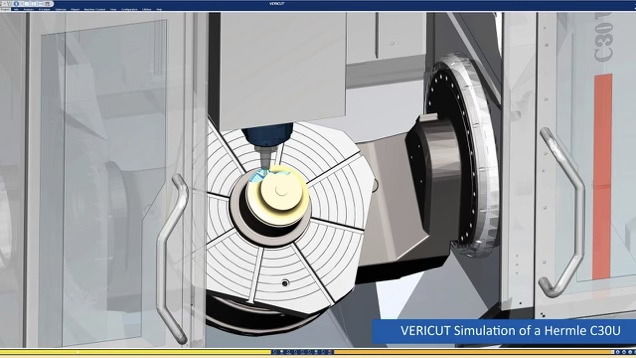
While 5-axis movement is more complex, modern CAD/CAM and Simulation software have significantly lowered the barrier to entry. We recommend that any 5-axis investment be paired with robust collision-avoidance software to protect the spindle and ensure “First-Part-Correct” production.
What is the lead time for a new 5-axis machine?

Lead times vary by manufacturer but typically range from 1 week to 10 months. Because 5Xi Intelligence is a regional distributor for Michigan and Ohio, we maintain visibility into local inventory and “stock machines” that may be available for faster delivery to meet urgent production contracts.